
098 - ABC 13 slo mo 23sec
Watch to see the slow-motion, kinematic response a driver in a 31-mph impact with airbag deployment. We did this test way back in 1998. The change in velocity is -18 mph.
After forming and growing Billy Cox & Associates in 1991, then merging with EFI Global in 1998, Billy S. Cox, Jr., founded the final iteration, Billy Cox Group, in 2008. His career spans more than four decades in crash reconstruction and impact biomechanics. His work bridges science-based forensics analysis and real-world application – bringing clarity to the factors contributing to a crash scenario and providing an understanding of the injury mechanism and relationship to forces in a motor vehicle collision.
Throughout his career, he has served as an analyst, consultant, and expert witness in complex cases involving crash dynamics, occupant kinematics, and injury mechanisms. His approach combines scientific rigor with practical testing, ensuring that conclusions are not only theoretically sound but demonstrably accurate.
Beyond casework, Mr. Cox has dedicated significant time to advancing the field through education, research, and collaboration with industry professionals.
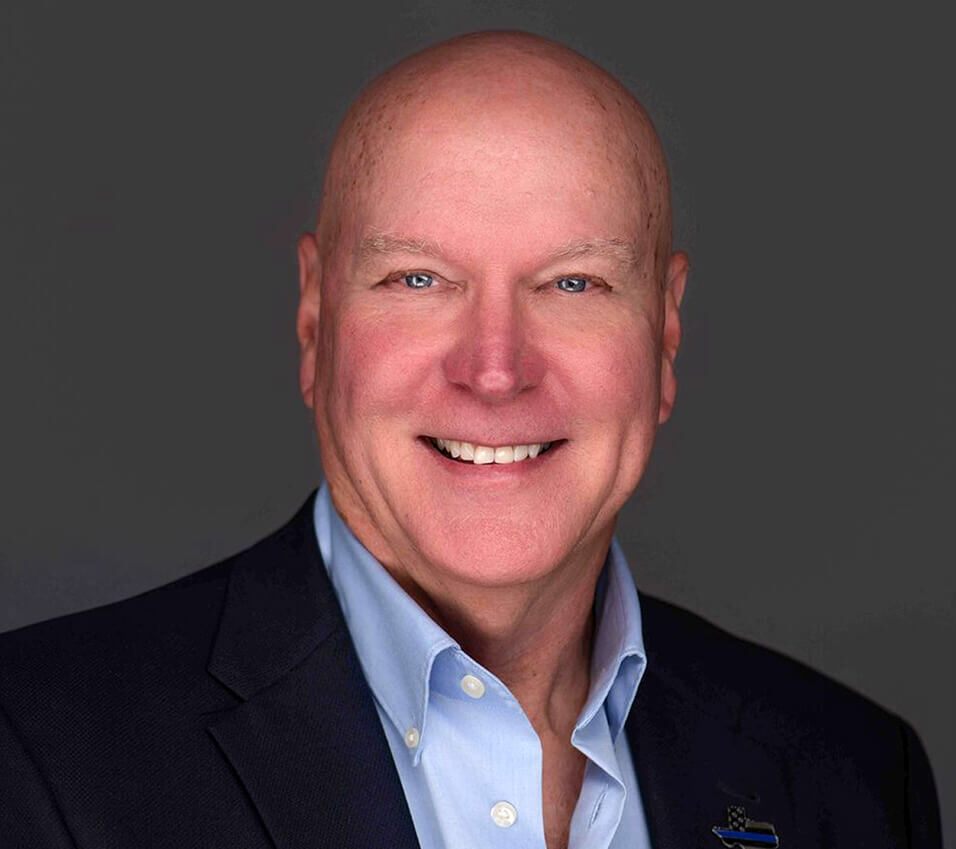
“Real-world testing is the difference between assumption and proof.”
Mr. Cox is accredited by the Accreditation Commission for Traffic Accident Reconstruction (ACTAR #983), a distinction that reflects the highest standards in the field.
He has delivered expert testimony more than 320 times, providing clear, defensible analysis in cases involving crash reconstruction, occupant response, and injury causation. His insights are grounded in decades of hands-on testing and research, allowing him to translate complex data into understandable, courtroom-ready conclusions.
In addition to his casework, he is a frequent lecturer on crash reconstruction and biomechanics, presenting to legal professionals, insurance specialists, and technical audiences nationwide.
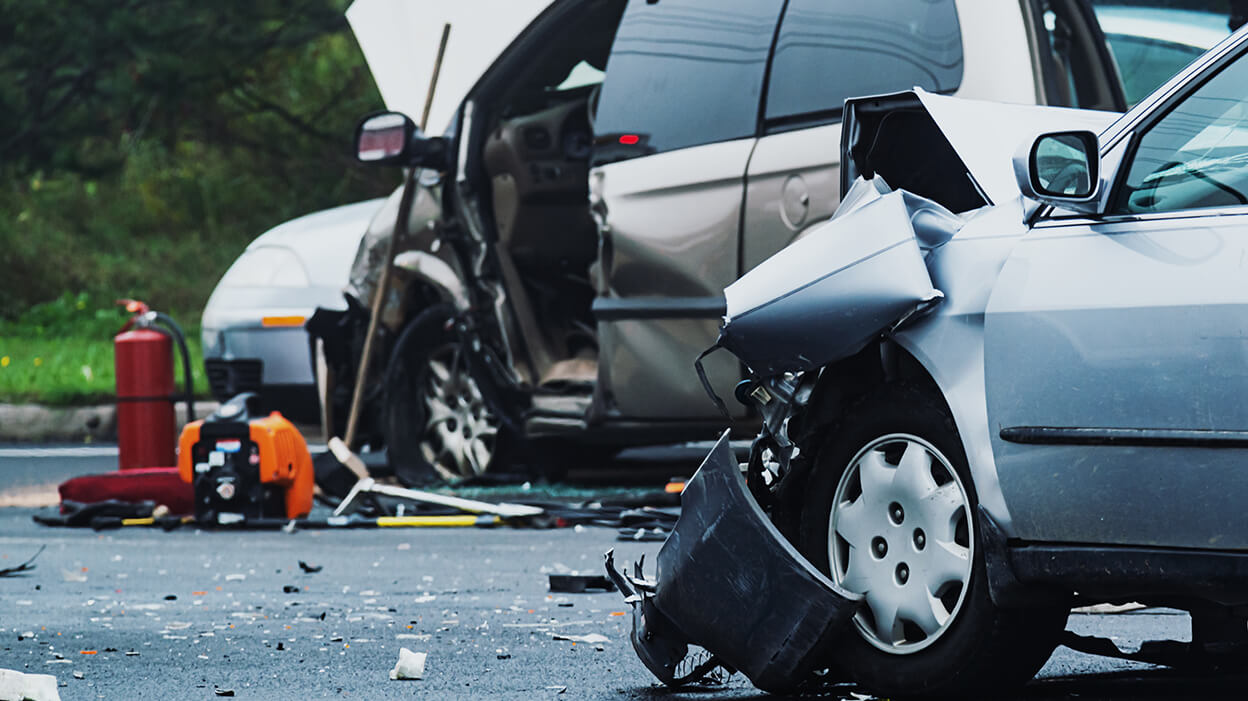
Four decades of hands-on experience and training in reconstruction, including 30+ years of crash testing and biomechanical research
Independently accredited by the leading authority in crash reconstruction.
Extensive real-world testing with human subjects and anthropomorphic devices.
NHTSA-Sponsored Research Contributor to a 300-hour study at Johns Hopkins Applied Physics Lab.
Featured on Discovery Channel, History Channel, and major network broadcasts.
Since 1995, Mr. Cox has conducted more than 330 instrumented crash tests, including over 270 involving human subjects and anthropomorphic test devices. These controlled tests provide critical data on vehicle dynamics, seat performance, and occupant movement during impact.
In 1996, he designed and built the Low Velocity Impact Simulator (LVIS)—a mobile crash laboratory still used today to study low-speed collisions and injury mechanisms. This innovation has played a key role in advancing understanding of how seemingly minor impacts can result in significant physical effects.
His research also includes a 300-hour study conducted at Johns Hopkins University Applied Physics Laboratory, sponsored by the National Highway Traffic Safety Administration (NHTSA), examining the relationship between seat design and neck injury.
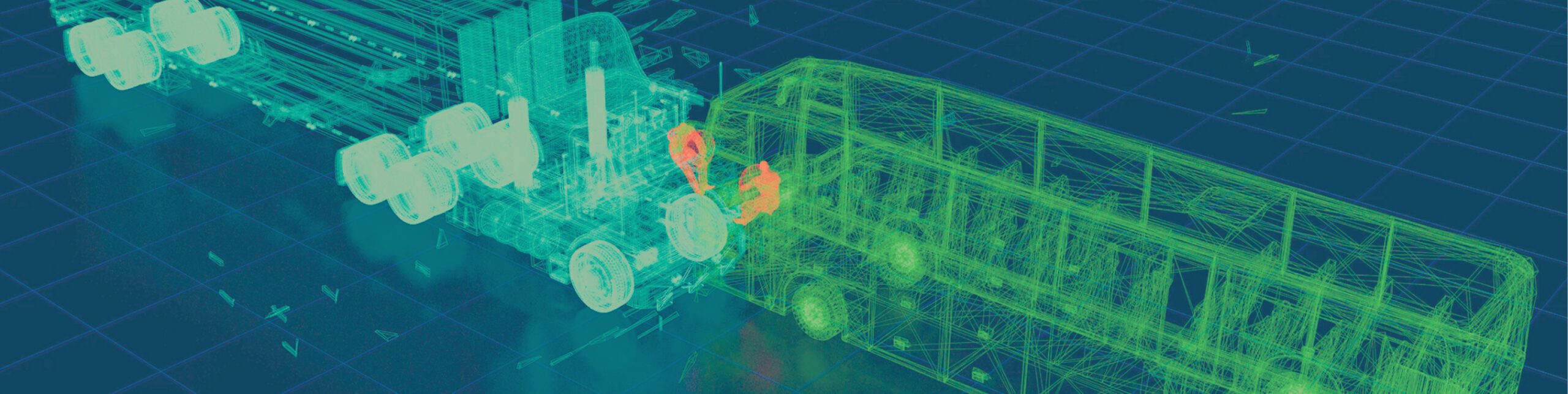
Mr. Cox’s expertise has been featured across national media and entertainment platforms. He has appeared in network broadcast news segments in major U.S. markets and contributed to programming on the Discovery Channel and The History Channel.
He was also featured as a guest scientist on Stan Lee’s Superhuman and served as a biomechanics consultant to Quentin Tarantino for the film Death Proof, advising on crash realism and injury mechanics.
His work continues to influence both legal outcomes and public understanding of crash science.
These videos demonstrate the principles behind our analysis—capturing real-world data used to support expert testimony and case findings.
Watch to see the slow-motion, kinematic response a driver in a 31-mph impact with airbag deployment. We did this test way back in 1998. The change in velocity is -18 mph.
Ride along with Mr. Cox as he demonstrates the kinematic response in a 31 mph impact with airbag deployment in this 1998 classic. The change in velocity is -18 mph.
In 2021 we performed a series of crash tests at an indoor Kart track in Missouri to simulate a collision that occurred between two riders and gather data on rider biomechanics. Ride along in the chase vehicle to see what a Kart crash looks like in real time.
Since 2007, we have collaborated with RSR Engineering, inventor of Phantom Driver, to perform remotely driven crash testing. At the 2021 annual conference of the Midwest Association of Traffic Accident Investigators (MATAI), we programmed a passenger car to strike the cultivator attachment of a farm tractor in a head-on collision. Ride along in the remotely driven vehicle and watch the Phantom Driver work.
This is the track side view of the 2021 indoor Kart crash testing.
In 2017 we performed a series of crash tests at amusement park ride in Branson, Missouri to simulate a collision that occurred between two riders and gather data on rider biomechanics. Ride along with Mr. Cox as he and another volunteer demonstrate the kinematic response of a rider in a head-on GoKart crash.
Ever wonder what the steering angle input means in the data recovered from a vehicle event data recorder (EDR)? In this video, we input the steering data from a Nissan Rogue into an AB steering robot and went along for the ride on the road where the crash occurred. The steering input caused the vehicle to move into oncoming traffic before returning to the correct lane.
We use drones in crash reconstruction to assist in scene measurements. We also use it to provide a unique perspective in our crash testing. Here, we track the movement of the Nissan Rogue with the AB steering robot on the actual road where the crash occurred.
We use multiple cameras in every crash test. This is drone view of the passenger vehicle/farm equipment crash test at the 2021 MATAI training conference.
At the 2022 annual conference of the Midwest Association of Technical Accident Investigators (MATAI), we programmed the recovered crash data from a Nissan Sentra involved in a freeway collision where the driver failed to stop for slowing traffic. Ride along in the chase vehicle for a test where we used a device known as Phantom Driver to remotely operate the Nissan Sentra.
We use multiple cameras in every crash test. This is the right front fender camera from the chase vehicle for the remotely driven Nissan Sentra at the 2022 MATAI training conference
Since 2007, we have been involved in volunteer testing at the annual Southwestern Association of Technical Accident Investigators (SATAI). At the 2026 SATAI annual conference we performed a series of increasing magnitude rear to barrier crash tests. In this example, see the difference in kinematic response between the unrestrained driver and restrained front passenger.
In our testing program that we conducted for research and employee training in 1998, Houston’s ABC 13 was there to report on our activities. This is the segment that aired regarding the tests we performed, including the 31 mph impact with airbag deployment.
In 2000, we participated a two day conference discussing fraudulent auto crash claims in Mesa, Arizona. In this piece, ABC 15 reported on the conference and interviewed Mr. Cox regarding low speed collisions and the related biomechanics. The report features video from the second day testing with our Low Speed Impact Simulator known as LVIS.
Since its inception in 2002, we participated as a crash team with the organizers of the ARC-CSI training conference. At the 2006 conference, the crew from Discovery Channel came out to document the training activities. In this video, we instrument Ryan Stock, star of the series, “Guinea Pig” and expose him to a highway speed crash with airbag deployment.
This video collage features some archived video from the original rocket sled testing by the father of human subject testing, Col. John Paul Stapp (1910-1999), along with some fun crash tests we’ve done over the years.